



Shopping Cart
Sailing for your first cross-country flights
Categories :
MosAiles News
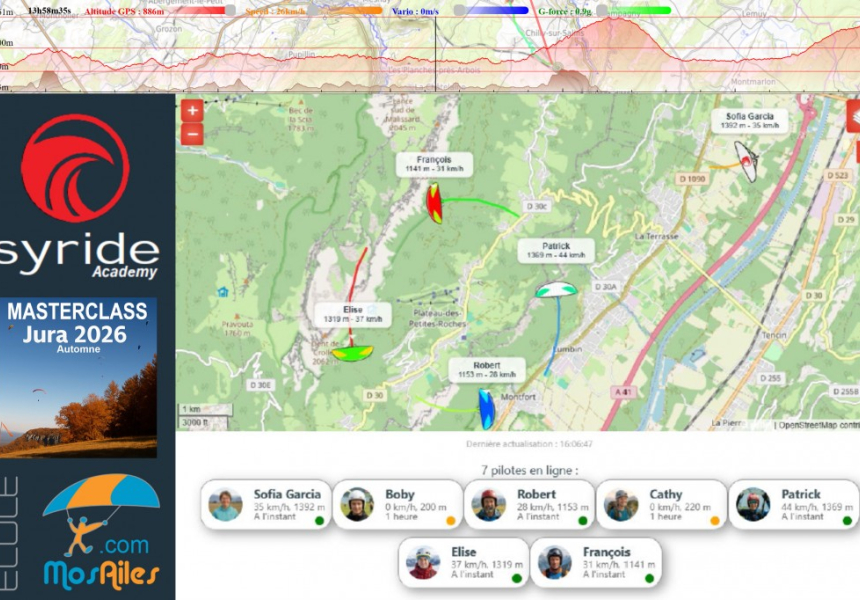
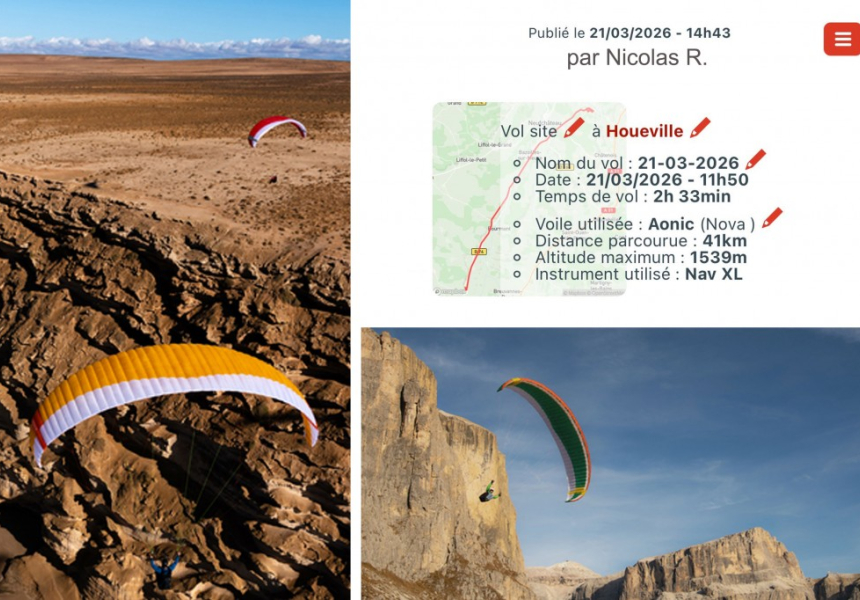
Nicolas R., a pilot who flies less than 30 hours a year, completed his first distance flight (41 km with an EN A certified wing)
Choosing the right wing is crucial for successful first distance flights (cross-country), but contrary to popular belief, raw performance is not the main criterion. For a smooth start in cross-country flying, priority should be given to safety, tolerance, and ease of handling.
A wing that frees the pilot, not one that constrains
For your first kilometers away from the practice slope, the goal is not to go fast or far at all costs, but to stay clear-headed and mentally available. A wing that is too demanding (EN B+ or higher) takes up a lot of “thinking space”: managing collapses, constant active piloting, anticipation...
Result: less availability for strategy (route choices, reading the air, decisions).
On the other hand, an accessible wing (such as EN A or A+):
- naturally absorbs turbulence
- reopens on its own in most cases
- requires fewer technical interventions
It therefore allows you to gradually transfer piloting to the reflex zone, and to keep your “brain available” for cross-country flying.
Real performance: beyond common misconceptions
A modern EN A wing is not limiting for starting distance flying:
- it allows you to efficiently core thermals
- it offers sufficient glide ratios to chain transitions
- flights of 100 to 200 km are regularly achieved
The limiting factor is therefore not the wing, but the pilot’s strategy and experience.
The right compromise for starting cross-country
For your first distance flights, a suitable wing should:
- be within your weight range, ideally in the middle
- offer good thermal readability
- remain forgiving in case of piloting errors
Recommended profiles:
- Classic EN A: maximum safety, smooth progression
- EN A+: better glide while remaining accessible (e.g.: Nova Aonic)
Beware the trap of the “more performant wing”
Many pilots think that a more performant wing will help them succeed in cross-country flying. In reality:
- a more demanding wing increases stress
- it reduces the safety margin in strong conditions
- it can degrade performance if the pilot is not perfectly at ease
A wing suited to your level will make you more effective, for longer, and in safety.
In summary:
- favor an easy and reassuring wing
- seek mental stability before performance
- focus on strategy and reading the air
A good beginner cross-country wing is not the one that flies best on paper, but the one with which you make the right decisions in the air.
Share this content